Nepal Interledger Financial Network(NIFN)

Connecting Nepal's
Digital Future

A neutral regulator-aligned platform that champions open interoperability in digital payments through the Interledger Protocol, ensuring secure, seamless, and inclusive value exchange.

Our Identity & Mandate

NIFN is a non-profit, non-commercial initiative operating under the Nepal Internet Foundation. It is dedicated to serving the public interest by promoting coordination and collaboration across the digital ecosystem. The project focuses on creating inclusive, transparent, and sustainable solutions that benefit society as a whole, ensuring that technological advancements align with the needs of the community.

What NIFN Is

  • Neutral & Public-Interest Oriented
  • Fully Regulator-Aligned
  • Technology-Agnostic Standards Body
  • Capacity Building & Coordination Platform

What NIFN Is NOT

  • A Bank or Fund Custodian
  • A Payment System Operator (PSO/PSP)
  • A Currency or Crypto Issuer
  • Replacement for NCHL, RTGS, or connectIPS

Vision

Our goal is to promote open interoperability standards with a particular focus on the Interledger Protocol (ILP). We aim to achieve this through active collaboration with regulators, financial institutions and global bodies. By fostering these partnerships, we seek to create a transparent and inclusive framework that supports seamless connectivity across diverse payment systems while ensuring compliance and innovation.

Mission

Our mission is to support a secure, inclusive and interoperable digital financial ecosystem in Nepal. We aim to enable seamless value exchange across platforms while safeguarding regulatory sovereignty and building public trust. This approach ensures that innovation aligns with national priorities and benefits all stakeholders in a transparent and sustainable manner.

Core Objectives

Facilitate Interoperability Without Replacement

Drive Financial Inclusion & Affordability

Align with Global Open Standards

The Interledger Protocol (ILP)

Interledger Protocol (ILP) is an open standard designed to connect different payment networks in the same way the Internet connects computers. It enables fast, low-cost, and secure transfers across diverse ledgers and platforms, creating a seamless experience for value exchange without compromising interoperability or security.
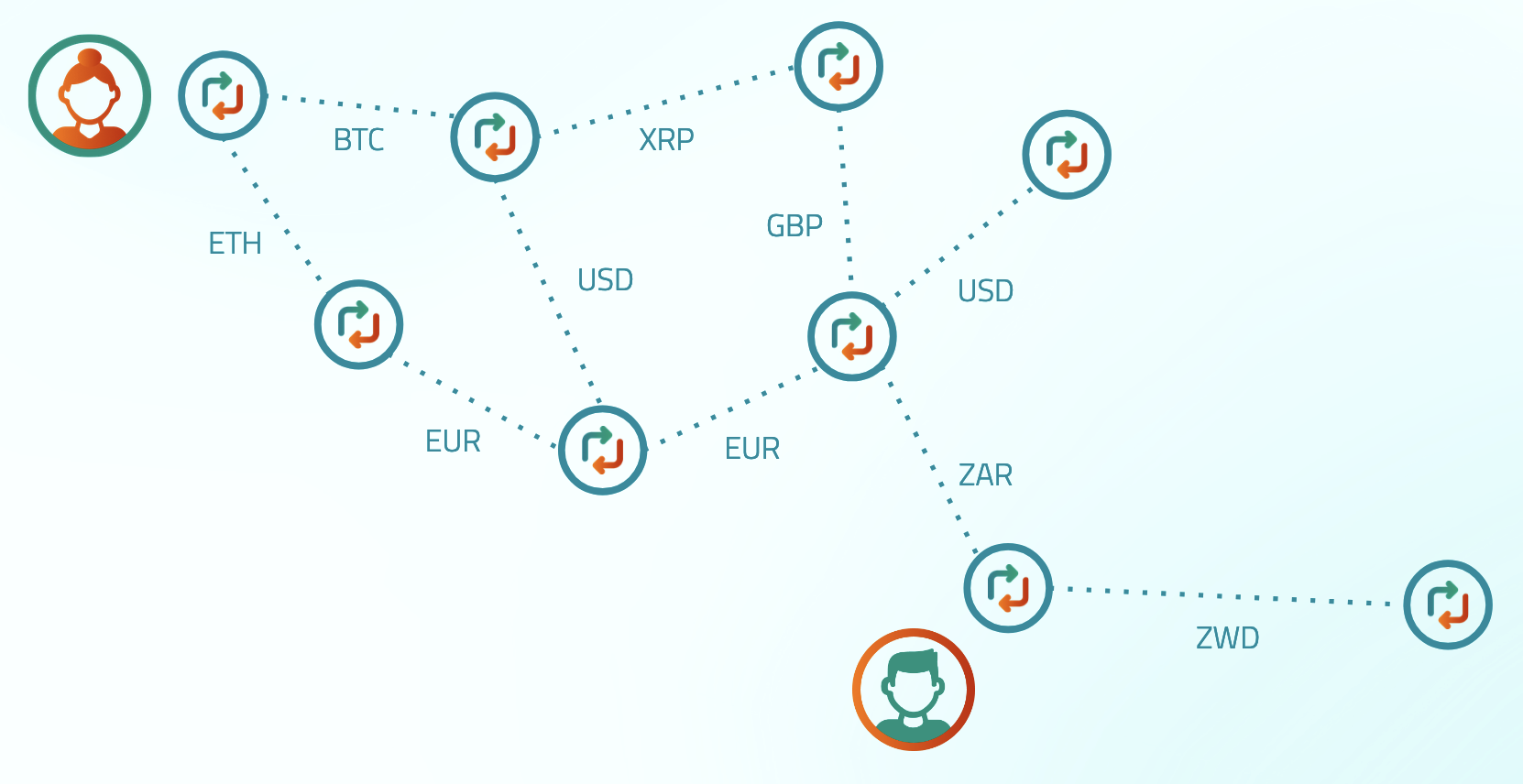
Interledger Protocol Network Architecture

ILP acts as a neutral interoperability layer that sits above existing payment systems. It does not replace current infrastructure but connects them seamlessly, enabling secure and efficient value transfers across diverse networks without requiring major changes to underlying systems.

Key Use Cases in Nepal

Cross-Border Remittances

Cross-border remittances allow people to send and receive money internationally in a fast, secure, and affordable way. Real-time low-cost transfers from Gulf countries and India can go directly to any Nepali wallet or bank, reducing reliance on expensive traditional channels..

Bank ↔ Wallet Flows

Bank-to-wallet flows enable seamless interoperability without the need for complex bilateral integrations. This approach simplifies connectivity between financial institutions and digital wallets, ensuring faster transactions and a more inclusive payment ecosystem. .

G2P Payments

G2P payments enable faster and more efficient disbursement of social benefits and relief funds. By offering choice-based delivery, beneficiaries can receive payments directly into their preferred bank account or digital wallet, improving convenience and financial inclusion. .

MSME & Trade

MSME and trade payments enable instant micro-transactions for sectors like tourism, freelancers, and cross-border trade. This approach supports small businesses and independent workers by providing fast, secure, and cost-effective payment solutions that enhance global connectivity and economic growth.
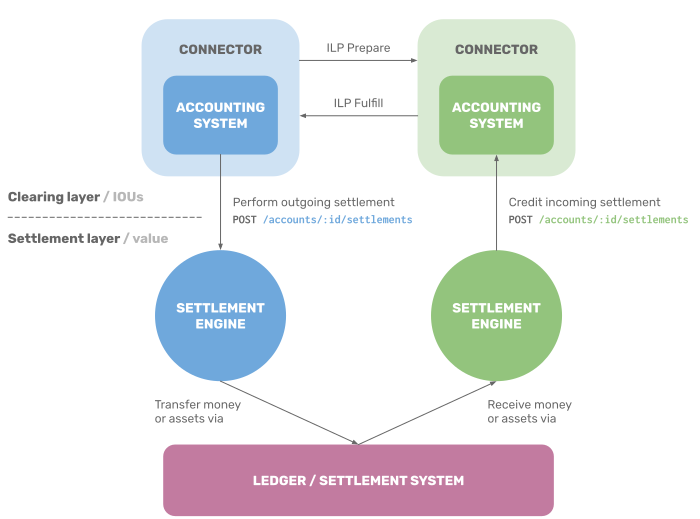
Use Technology

NIFN leverages open-source, high-performance technologies to enable secure, interoperable, and scalable digital payments across Nepal. Our stack is designed to support regulator-aligned, neutral financial networks while fostering financial inclusion.

Interledger Protocol (ILP)

ILP is a packet-switched protocol that routes value across ledgers, similar to how IP routes data. It ensures atomic, secure transfers without holding funds, enabling seamless interoperability between banks, wallets, and cooperatives.

Rafiki - Open Payments Stack

Rafiki is the official ILP reference implementation. It provides Open Payments APIs, STREAM payment support, and connector routing to enable wallet-to-wallet and cross-border transactions while maintaining compliance and security.

TigerBeetle Ledger

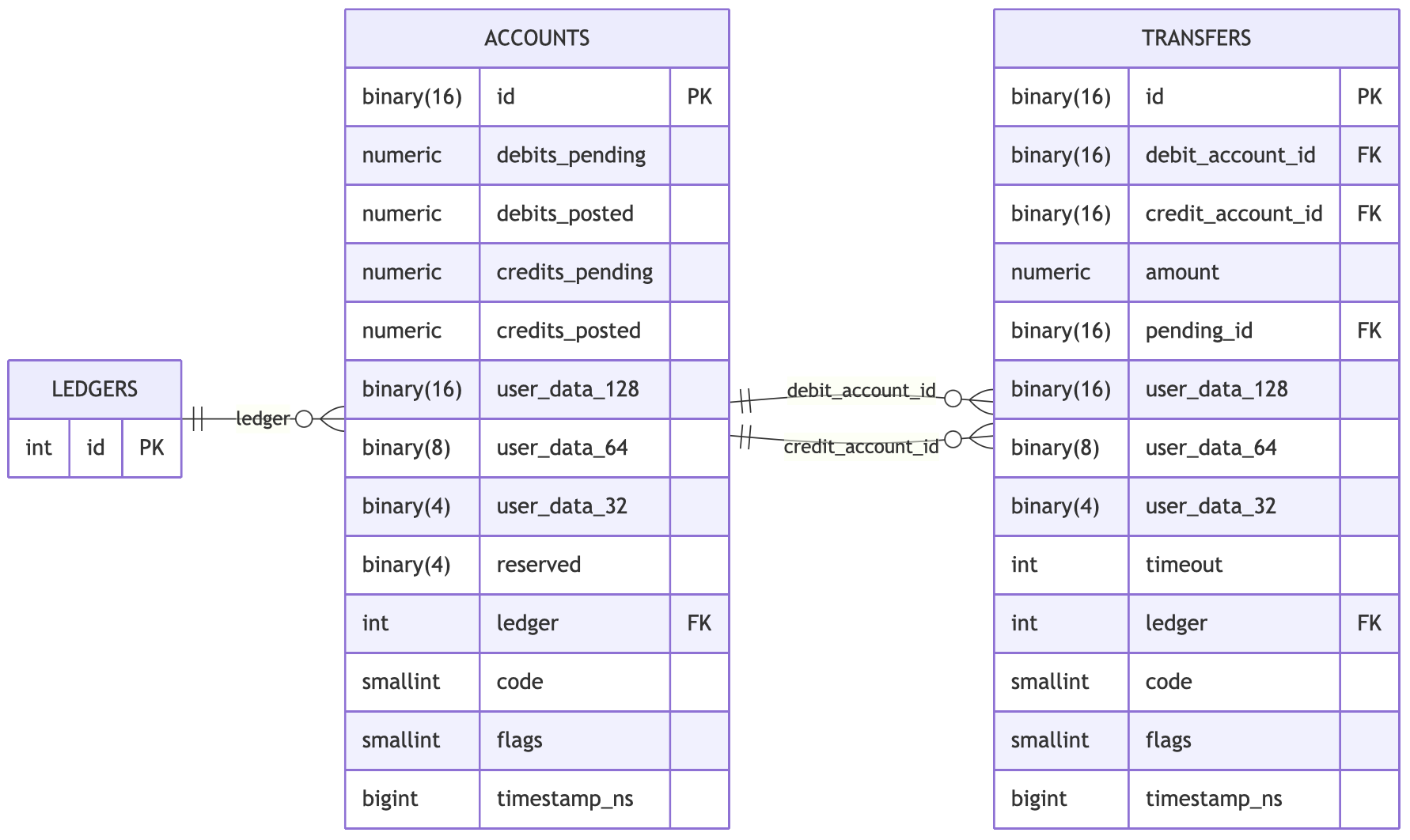
TigerBeetle is a high-performance financial ledger for double-entry accounting. It tracks liquidity, ensures atomicity, and enables secure, scalable ILP settlements, powering Rafiki nodes for all conditional payment flows in NIFN.

STREAM Protocol

STREAM transports ILP payments in small packets for real-time or micropayment transactions. It supports retries, congestion control, and continuous streaming, ensuring reliable value transfer across Nepal's financial networks.

Security & HTLCs

NIFN leverages cryptographic conditions, hash-time locked contracts (HTLCs), and fulfillment verification to ensure atomicity and security of payments. This guarantees no partial loss and regulator-compliant fund transfers.

Cloud-Native Deployment

All components are containerized (Docker/Kubernetes) to ensure scalability, high availability, and data sovereignty. NIFN can deploy Rafiki, TigerBeetle, and supporting services locally in Nepal with full auditability.

Technical Glossary & Learning Path

A simple step-by-step guide with illustrative diagrams to understand NIFN's core technologies.

ILP Packet Flow Diagram
1

ILP basics: Prepare, Fulfill, Reject packets

ILP Network Diagram
2

Connectors, peering & routing tables

STREAM Payment Diagram
3

STREAM payments & congestion control

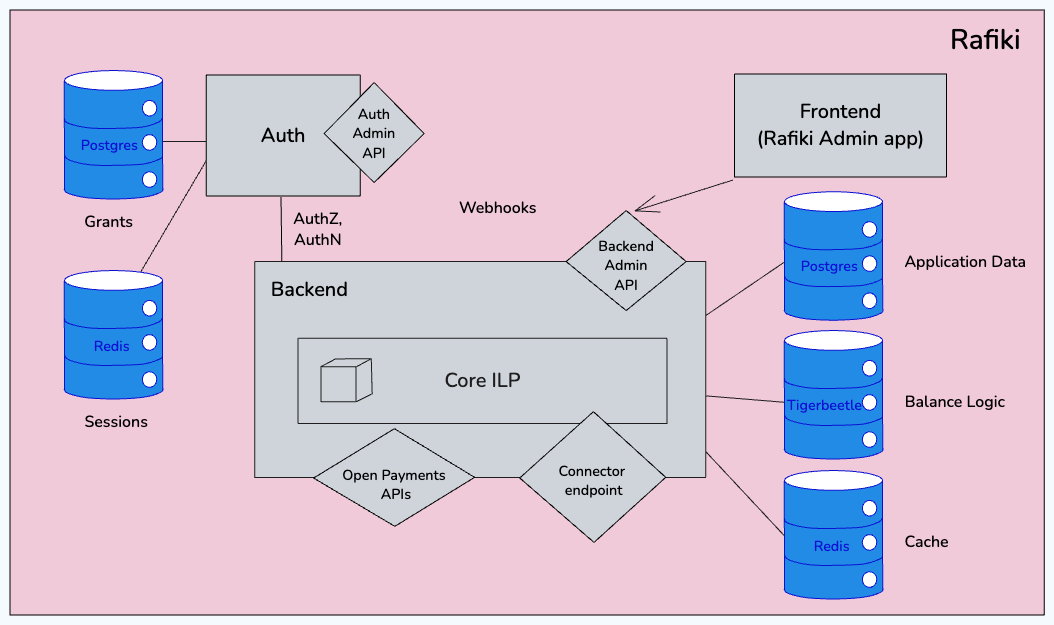
Rafiki Architecture Diagram
4

Rafiki APIs & Open Payments

TigerBeetle Ledger Diagram
5

TigerBeetle double-entry ledger

Kubernetes Architecture Diagram
6

Kubernetes deployment

Compliance Audit Diagram
7

Audit logs, testing & compliance

Phased Implementation Roadmap

The phased implementation roadmap provides a pragmatic regulator-guided approach to achieving national and regional interoperability. It outlines a structured path that begins with controlled pilots and gradually expands to full-scale integration, ensuring compliance, security and inclusivity at every stage.

1

Phase 1: Sandbox & Pilot

Phase 1 of the implementation roadmap focuses on launching a controlled pilot. This phase will involve one Payment System Operator (PSO), one Payment Service Provider (PSP) wallet, and one cooperative institution, with transactions limited to domestic transfers only. The goal is to test functionality, ensure compliance, and gather insights before scaling further.

2

Phase 2: National Interoperability

Phase 2 will focus on achieving national interoperability by introducing the National Payment Switch (NPS) as a neutral connector. This will enable seamless transactions between banks and wallets as well as wallet-to-wallet transfers across the ecosystem..

3

Phase 3: Cross-Border Corridors

Phase 3 will establish a cross-border payment corridor starting with a pilot for India and Gulf countries. Remittance partners will be onboarded to enable secure and efficient international transfers, expanding the ecosystem beyond domestic boundaries.

4

Phase 4: Regional Expansion & CBDC Readiness

Phase 4 will drive regional expansion by enabling interoperability across South Asia and preparing the ecosystem for Central Bank Digital Currency (CBDC) integration. This phase aims to strengthen cross-border connectivity and future-proof the payment infrastructure for emerging digital currency frameworks.